
Blocking the cycle: Antimalarial and immunisation strategies to target Plasmodium falciparum transmission
Keywords:
Reducing Plasmodium falciparum transmissionSynopsis
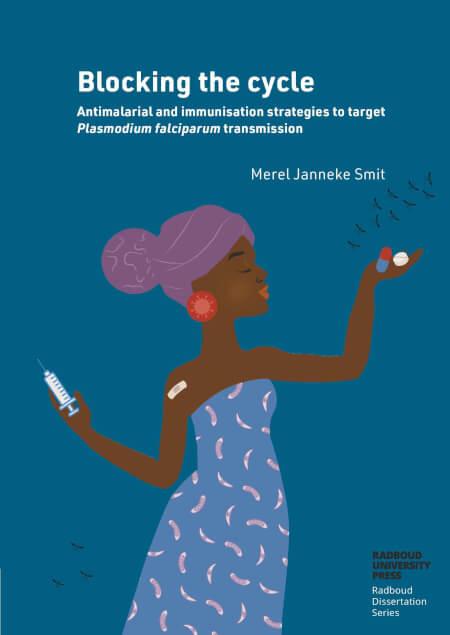
Malaria remains a major global health challenge, with Plasmodium falciparum responsible for most morbidity and mortality. This thesis explores strategies to reduce malaria transmission through both drug- and antibody-based interventions. In three phase 2 clinical trials in Mali, we evaluated how different antimalarial regimens influence gametocyte carriage and infectiousness to mosquitoes, demonstrating variable transmission-reducing activity across artemisinin-based and non-artemisinin combination therapies, and highlighting the potential of adding low-dose gametocytocidal drugs such as primaquine or tafenoquine. We further assessed the transmission-blocking vaccine candidate R0.6C and the monoclonal antibody TB31F in first-in-human studies, showing that both are safe and immunogenic, with TB31F providing potent and long-lasting functional activity. A life cycle assessment of a malaria clinical trial quantified its environmental footprint, identifying key contributors and mitigation strategies. Finally, a phase 1 study of the SARS-CoV-2 vaccine candidate ABNCoV2 provided the first clinical evaluation of the modular capsid virus-like particle (cVLP) platform, demonstrating its safety, tolerability, and immunogenicity in humans. Collectively, these studies advance integrated and sustainable strategies to block Plasmodium falciparum transmission and support malaria elimination.
Published
Series
Categories
License

This work is licensed under a Creative Commons Attribution-NonCommercial-NoDerivatives 4.0 International License.