
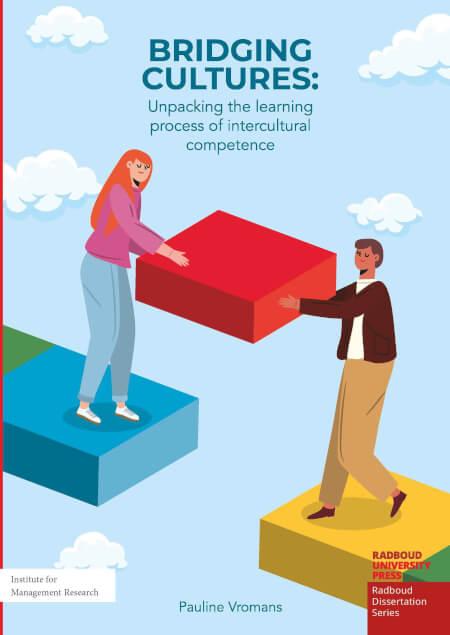
Bridging cultures: Unpacking the learning process of intercultural competence
Keywords:
Intercultural competence, Internationalization of higher education, Expatriates, Cultural Intelligence, Adult third culture kids, Intercultural trainingSynopsis
As workplaces become increasingly international and diverse, intercultural competence, the ability to interact effectively with people from different cultural backgrounds, has become essential. This dissertation examines various learning experiences to understand whether, and how, they develop intercultural competence.
First, intercultural competence development in the classroom was investigated by integrating an intercultural learning tool into a regular university course. Second, the intercultural experiences of Ph.D. students and their supervisors, who lived and worked internationally as part of a research consortium, were explored to identify how trigger events contributed to their competence development. Third, the study examined how growing up abroad as a third culture kid influences multicultural personality traits. The dissertation illustrates how people make sense of intercultural experiences and the strategies they use and focuses on the learning processes that underlie the development of intercultural competence.
The studied learning experiences lead to different outcomes for different individuals. For competence to develop, an intercultural learning process must transform an experience into meaningful learning. Key factors supporting this process include interaction with culturally diverse others, appropriate exposure to cultural differences, and opportunities for reflection. Critical incidents play an important role across all studies, highlighting their value for both learning and research.
Published
Series
Categories
License

This work is licensed under a Creative Commons Attribution-NonCommercial-NoDerivatives 4.0 International License.