
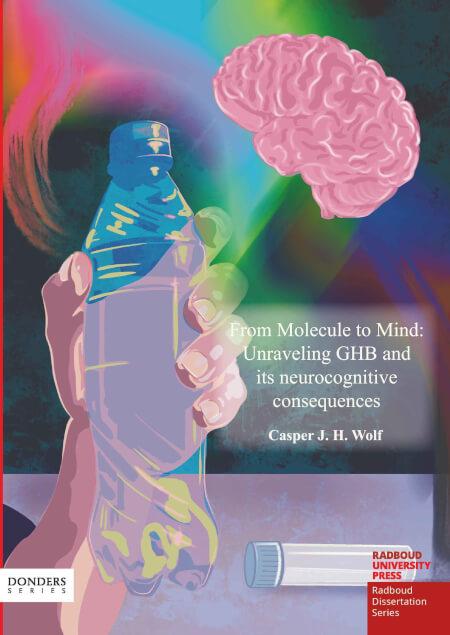
From Molecule to Mind: Unraveling GHB and its neurocognitive consequences
Keywords:
Gamma-hydroxybutyrate (GHB), Addiction, Withdrawal syndrome, Drug overdose, Long-term memory, HippocampusSynopsis
GHB is a party drug that users consider relatively harmless. This dissertation shows that this belief is incomplete. Daily GHB-use is linked to changes in the brain and causes memory problems in animals used in research. In particular, long-term memory is affected, while short-term memory for ongoing tasks seems to remain intact. Surprisingly, comas caused by high doses of GHB do not appear to cause additional damage to short-term memory in these animals. This does not mean such comas are safe: GHB-induced comas can be life-threatening. This dissertation also shows changes in the hippocampus, a part of the brain that plays a key role in learning and memory. In addition, this dissertation describes what happens when people with a GHB addiction stop using GHB. Many withdrawal symptoms occur, which differ between men and women, but can be treated well with the right medical care. Together, these findings show that GHB-use involves serious risks, may be more harmful than assumed, and highlight the importance of prevention and careful medical management.
Published
Series
Categories
License

This work is licensed under a Creative Commons Attribution-NonCommercial-NoDerivatives 4.0 International License.