
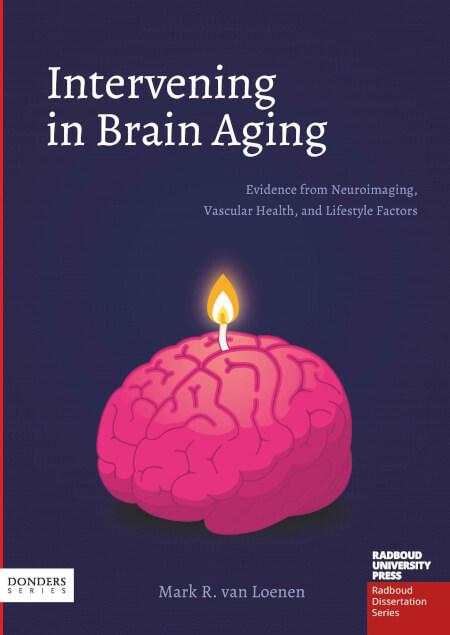
Intervening in Brain Aging: Evidence from Neuroimaging, Vascular Health, and Lifestyle Factors
Keywords:
Brain health, Lifestyle intervention, Magnetic resonance imaging, Cardiovascular health, Dementia, Cerebral blood flowSynopsis
Aging-related cognitive decline and dementia are complex and multifactorial processes that pose major societal challenges. Multidomain lifestyle interventions show promise as preventive measures, aimed at slowing the onset of cognitive decline by addressing a multitude of lifestyle-modifiable cardiovascular risk factors. This thesis applied a novel, multimodal neuroimaging approach that reinforced the role of cardiovascular factors as key targets for multidomain lifestyle interventions in combatting cognitive decline. At the same time, our findings underline the challenges in isolating markers of structural and functional brain integrity that are directly associated with cognitive benefits. Although this thesis focused primarily on mechanisms related to cardiovascular risk and neuroimaging measures of brain function, vascular factors alone are unlikely to be the only pathway linking linking peripheral
health to the functional and structural integrity of the brain. Future research, including ongoing work within the HELI study and the broader MOCIA consortium, will be able to further explore the multifactorial modifiability of brain aging and their associated mechanisms within the periphery and brain.
Improving our understanding of the peripheral and brain mechanisms underlying multidomain lifestyle intervention-induced cognitive improvement must go hand in hand with consideration for real-world applicability. Striking this balance will be essential to achieving meaningful preventive impact on the rise of cognitive decline and dementia around the world.
Published
Series
Categories
License

This work is licensed under a Creative Commons Attribution-NonCommercial-NoDerivatives 4.0 International License.