
The role of complexity in individual decision making
Keywords:
Decision making, Complexity, Experimental economics, Behavioral economicsSynopsis
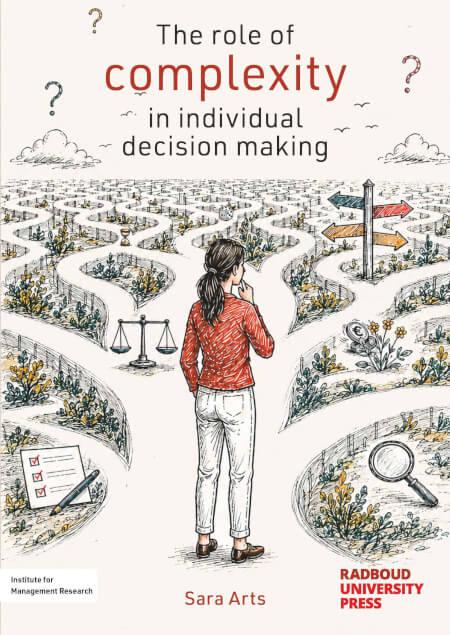
People need to make many decisions every day, from choosing groceries in the supermarket to deciding on a mortgage or pension plan. These decisions often involve weighing risks, comparing options, trading off conflicting outcomes, and dealing with uncertainty. Economists have long tried to understand how people make such decisions, typically assuming that people, given certain constraints, know how to compare options and choose the best one. Yet in practice, people often express a lack of confidence in their decisions, behave overly cautiously by sticking to the default choices, change their minds about their decisions, or delay the decisions. This dissertation contains three chapters that focus on one important factor that affects decision-making: Decision complexity.
The central idea is that people may find many decisions difficult to make. People may not fully understand the choice environment (e.g. what exactly are the implications of a tax reform). Or they may feel unsure about the value they attach to choice options (e.g. complicated financial products). These forms of complexity can cause people to use decision heuristics, leading to systematic biases and decision errors. This dissertation investigates the role of complexity in decision-making in three steps, each covered in a separate chapter.
Published
Series
Categories
License

This work is licensed under a Creative Commons Attribution-NonCommercial-NoDerivatives 4.0 International License.