
Thinking fast, governing slow: Cognitive biases, policy cycles and international cooperation in long-term risks
Keywords:
Risk policy, Cognitive biases, Prevention policy, International cooperation, Societal risksSynopsis
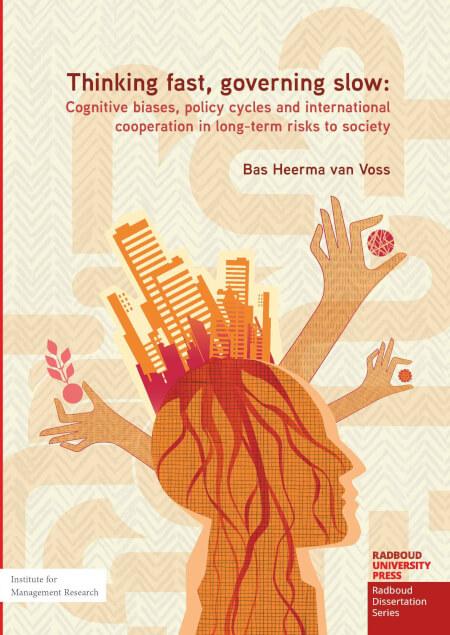
This book investigates why states systematically struggle to mitigate long-term destabilizing risks—such as pandemics, climate change, and technological threats—despite possessing the knowledge and resources to do so. It advances an interdisciplinary framework that links three levels of analysis: cognitive biases in risk perception, political-economy constraints on sustained preventive investment, and collective-action problems in international cooperation.
Empirically, the book demonstrates how cognitive biases distort national risk assessments, even among experts, while showing that targeted debiasing interventions can significantly improve judgment. It then introduces the concept of the prevention cycle, a recurring pattern in which crises trigger temporary surges in preventive policy, followed by gradual retrenchment as political attention fades. At the international level, the analysis reveals a more complicated dynamic: crises weaken core funding for international organizations while simultaneously increasing earmarked, voluntary contributions by affected states.
Together, these dynamics produce a structurally inconsistent and often inadequate response to long-term risks. The book argues that improving risk governance requires simultaneous interventions across all three levels—enhancing foresight, stabilizing long-term policy investment, and redesigning international institutions. Without such integrated reforms, societies remain locked in reactive cycles, persistently underprepared for the risks that matter most.
Published
Series
Categories
License

This work is licensed under a Creative Commons Attribution-NonCommercial-NoDerivatives 4.0 International License.