
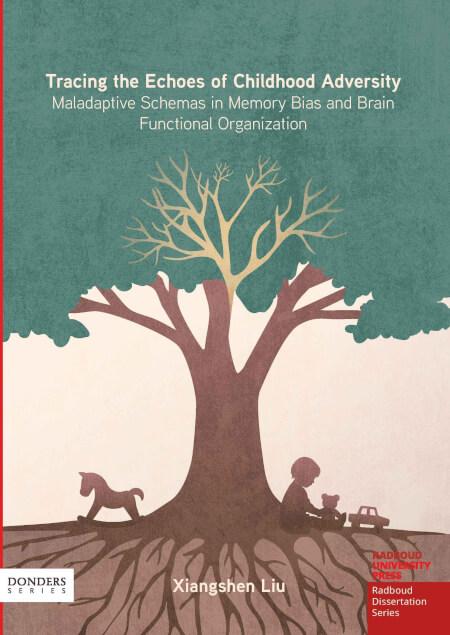
Tracing the Echoes of Childhood Adversity: Maladaptive Schemas in Memory Bias and Brain Functional Organization
Keywords:
Childhood adversity, Memory bias, Depression, Schemas, Functional connectivitySynopsis
The impact of childhood adversity is not limited to childhood; rather, it leads to long-lasting consequences for people’s mental health. To develop more effective interventions, it is important to understand how childhood adversity alters the brain and behaviour. To this end, the thesis traced “echoes” of childhood adversity in an emotional memory task. Advantages in remembering negative events over positive ones are commonly observed in people with depression. Results from our study showed that even for individuals who are not currently in a depressive mood, higher levels of childhood adversity were associated with a greater advantage in remembering negative over positive information. This negative bias was also seen in the activity of brain areas closely involved in emotional memory processing. Beyond the memory study, we also traced childhood adversity in resting‐state functional connectivity between brain regions. The results showed that a specific type of childhood adversity, emotional neglect, interacts with acute stress to influence the functional connectivity organization of the striatum, a key region of the reward processing system. These findings provide new insights into brain and cognitive changes related to childhood adversity, contributing to a better understanding of its underlying psychopathology.
Published
Series
Categories
License

This work is licensed under a Creative Commons Attribution-NonCommercial-NoDerivatives 4.0 International License.