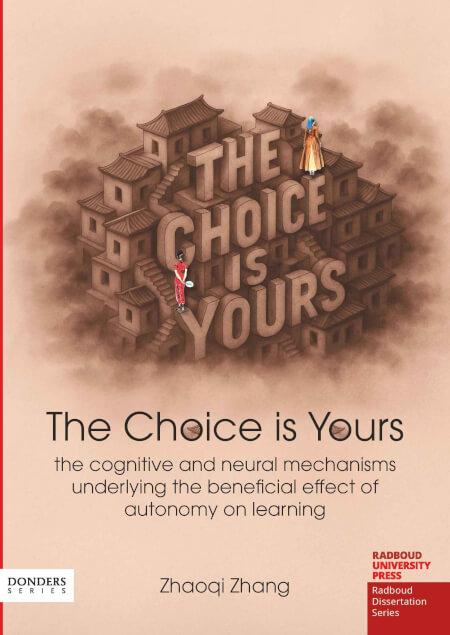
The Choice is Yours: The cognitive and neural mechanisms underlying the beneficial effect of autonomy on learning
Keywords:
learning motivation, autonomy, memory encoding, cross-cultural comparison, predictive codingSynopsis
As Carl Rogers famously said, “The only kind of learning which significantly influences behaviour is self-discovered, self-appropriated learning.” This sentiment captures the central role of autonomy in learning and education. However, surprisingly little is known about the cognitive and neural mechanisms underlying the benefits of autonomy in memory encoding and learning. My dissertation aims to investigate how the sense of autonomy influences memory encoding, in conjunction with other environmental factors that surround individuals, focusing on both cognitive and neural mechanisms. This thesis presents four empirical projects that systematically investigate the cognitive and neural mechanisms by which autonomy enhances learning and memory. Drawing on an ecological psychology framework, I examined how internal predictive processes, micro-environmental motivators, and socio-cultural factors interact with autonomy to influence learning outcomes. Across different operationalizations of autonomy—binary choices and active exploration—the findings consistently show that: (1) autonomy enhances learning through predictive processing (Chapters 2 and 3); (2) autonomy activates reward-related brain regions more reliably than monetary incentives (Chapter 4); and (3) cultural background influences the effectiveness of external rewards but not of autonomy (Chapter 5). Together, these findings contribute to a more nuanced understanding of motivation in learning and emphasize that autonomy, an intrinsic motivator, has a stable and powerful effect on memory encoding. In practical terms, these results advocate for educational practices that empower students with more autonomy in their learning process, as doing so may foster deeper and longer-lasting learning.
Published
Series
Categories
License

This work is licensed under a Creative Commons Attribution-NonCommercial-NoDerivatives 4.0 International License.